An African tribe of bloody fights - they are proud of their struggles
The women cut the young men's skin with a razor and lift it with a thorn. Once the skin is cut deep enough, they rub them with ash or vegetable juice to make the cut swell enough and leave a huge, permanent scar that they consider a work of art.
What is the price of nurturing your own culture and customs? When we look into the lives of isolated African communities, we see that the price is high. Their fondness for cultural art, scarification, and ritual practices, which often include painful elements, at the same time confuses and amazes the whole world.
One of the many peoples who practice such practices is the Suri, an agro-pastoral people who inhabited the western valley of the Omo River in Ethiopia. The Suri area was conquered by Ethiopian troops in the late 19th century and livestock empires began to be built there.
Due to the developed cattle breeding, they were the target of many attacks. To defend themselves and their livestock, the Suri tribe had to develop tactics of bloody fighting that became their tradition over the years.
It is interesting that when a boy reaches a certain age, he gets a bull to take care of him. He loses his identity because the rest of the tribe has to call him solely by the name of his bull. One of the most painful moments of the Suri man is the death of the animal.
Members of the Suri tribe own 30 to 50 cows and animals are also a medium of exchange for the bride. To get married, young men must offer their future wife's family at least 60 cows.
The ceremonial initiations in which a boy becomes a man are also brutal. One of the rituals is the fight with sticks to show the elders that they are brave warriors who can protect their village and cattle. This ritual is called Donga and is a combination of martial arts, sports, and rituals. Throughout the history of the Suri people, this practice has been intended to impress women and seek out potential wives. Traditionally, they struggle with little or no clothing to better feel the pain, and these conflicts often result in death.
The women cut the young men's skin with a razor and lift it with a thorn. Once the skin is cut deep enough, they rub them with ash or vegetable juice to make the cut swell enough and leave a huge, permanent scar that they consider a work of art. Men also collect scars at a later age, so that their bodies can tell a story of brave war endeavors.
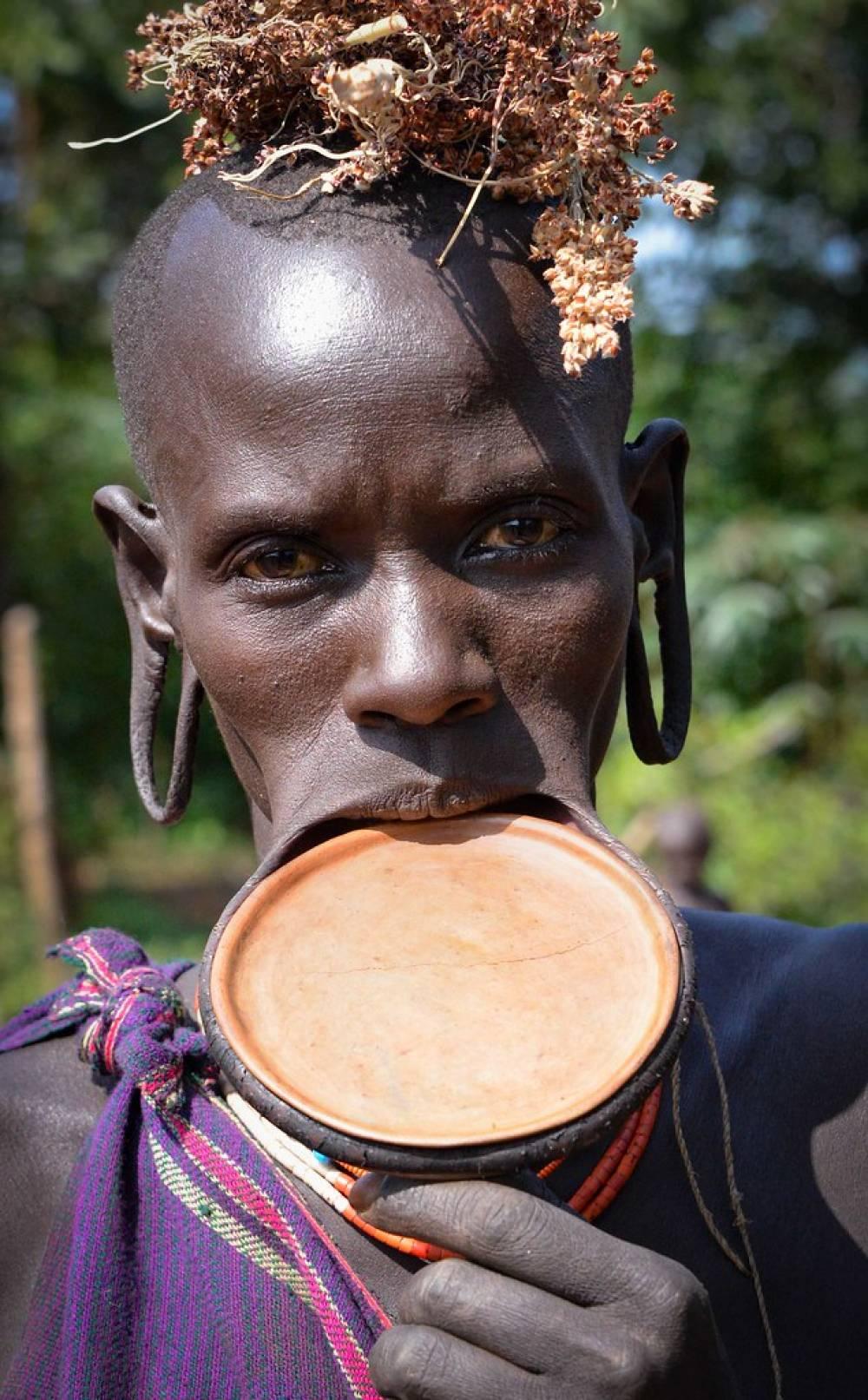
Brutal rituals did not bypass the girls either. You must have seen at least once a photo of smiling girls having a large clay disc on their lips. After the girl enters puberty, all the lower teeth are removed and the lower lip is incised to fit the clay disc.
This is a sign of beauty and belonging, and as girls grow, so does the disc. The lip stretches more and more so it requires a bigger disc. The bigger the disc on a girl’s lip, the more cows she can ask for when it comes time to get married.
Tribal members who do not wish to participate in this form of cultural mutilation are usually excluded from the community and expelled.